KIRKLARELİ TAEKWONDO COURSE - 12 LESSONS PER MONTH - 3 DAYS A WEEK
- Explanation of the Taekwondo gym and training rules.
- Getting started in Taekwondo and the history of Taekwondo.
- Basic Taekwondo poomse techniques
- Basic competition techniques
- Personal development training and practices
- Educational games
What is Taekwondo?
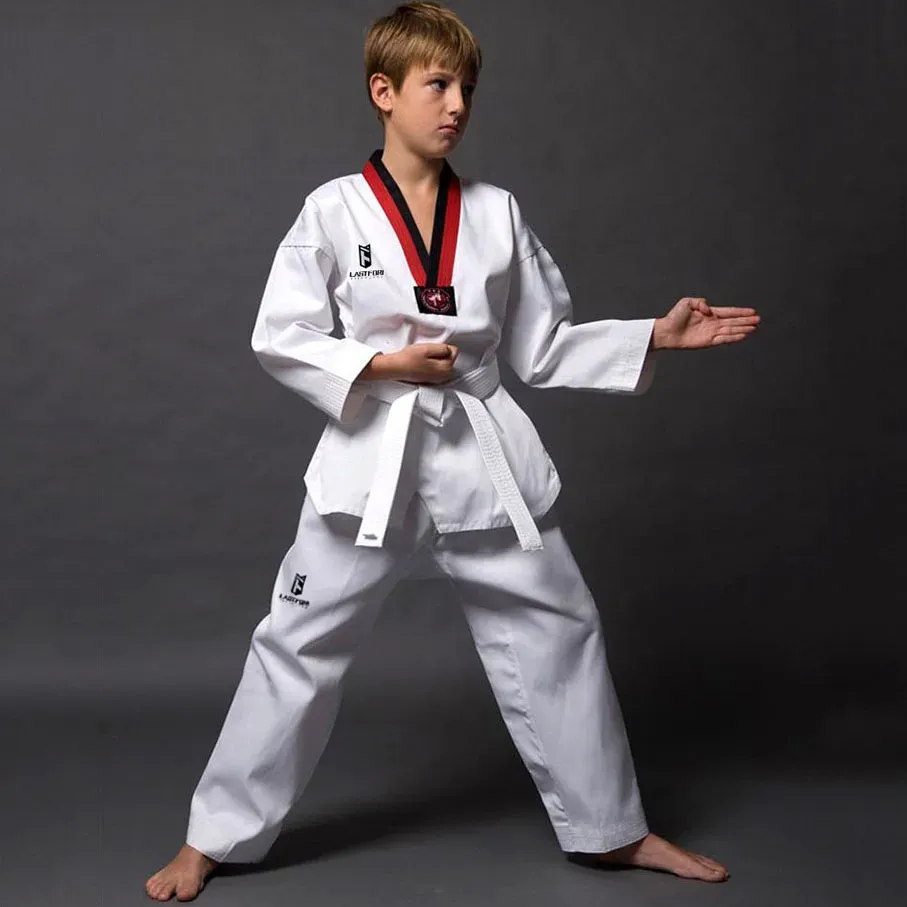
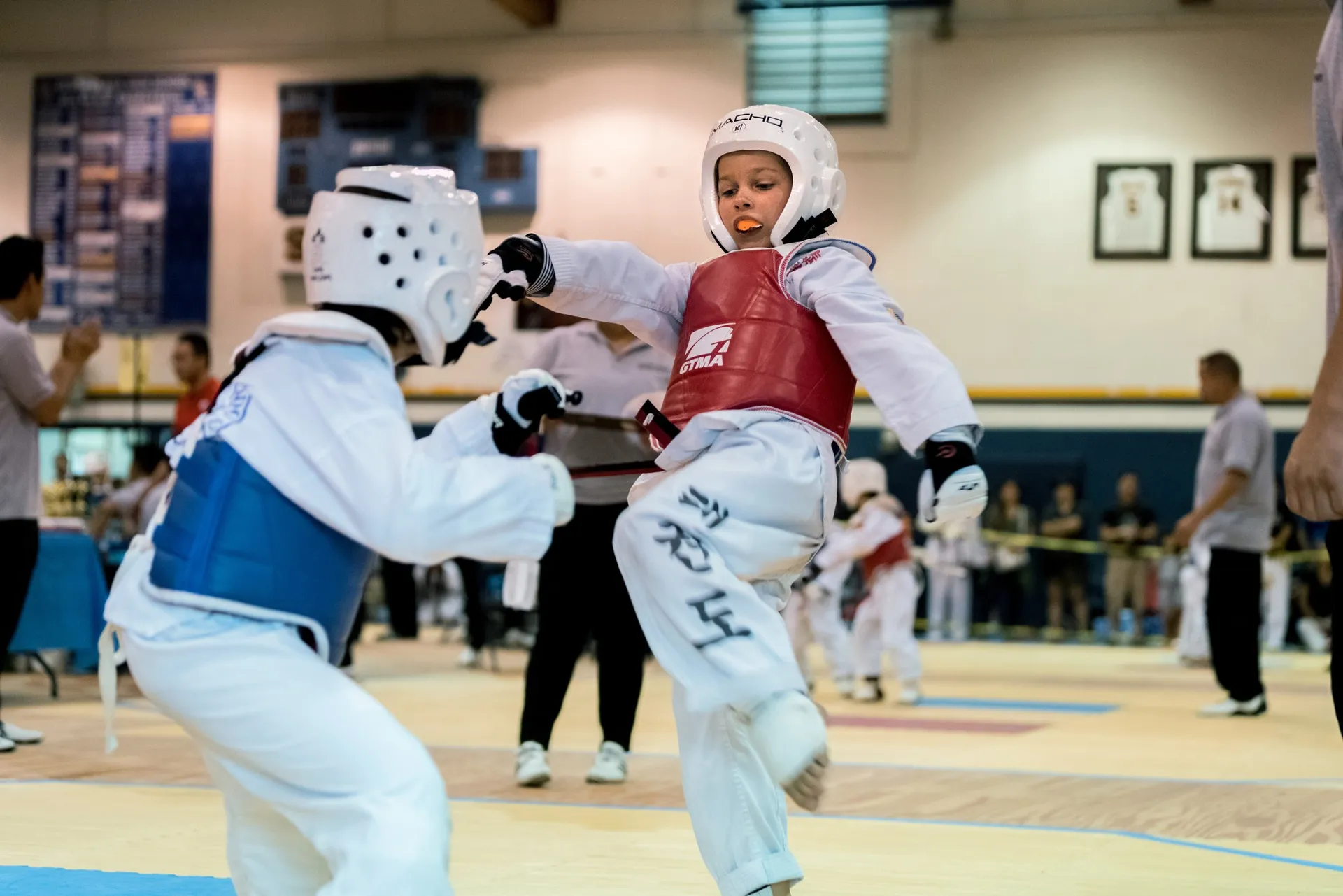
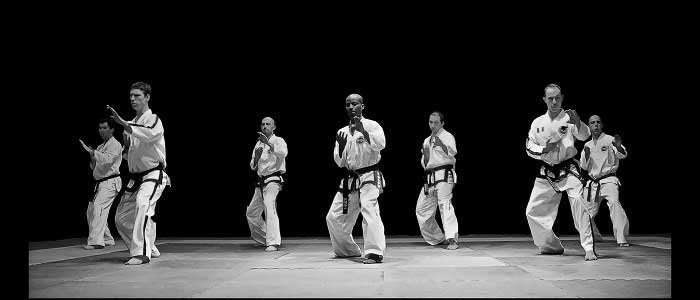 Taekwondo is a martial art practiced with bare hands and feet, originating in Korea. Far EastTaekwondo is a martial art and sport. In Taekwondo, belts are worn over the uniform to indicate skill and experience. These belts are categorized according to their level. white, yellow, green, blue, red and black The belts are colored. To facilitate grading, there is an intermediate belt between the two main belts, named after the belts before and after it. Belt exams are held every four months, and those who pass advance to the next belt level. The black belt is the highest rank among them.
How to do Taekwondo?
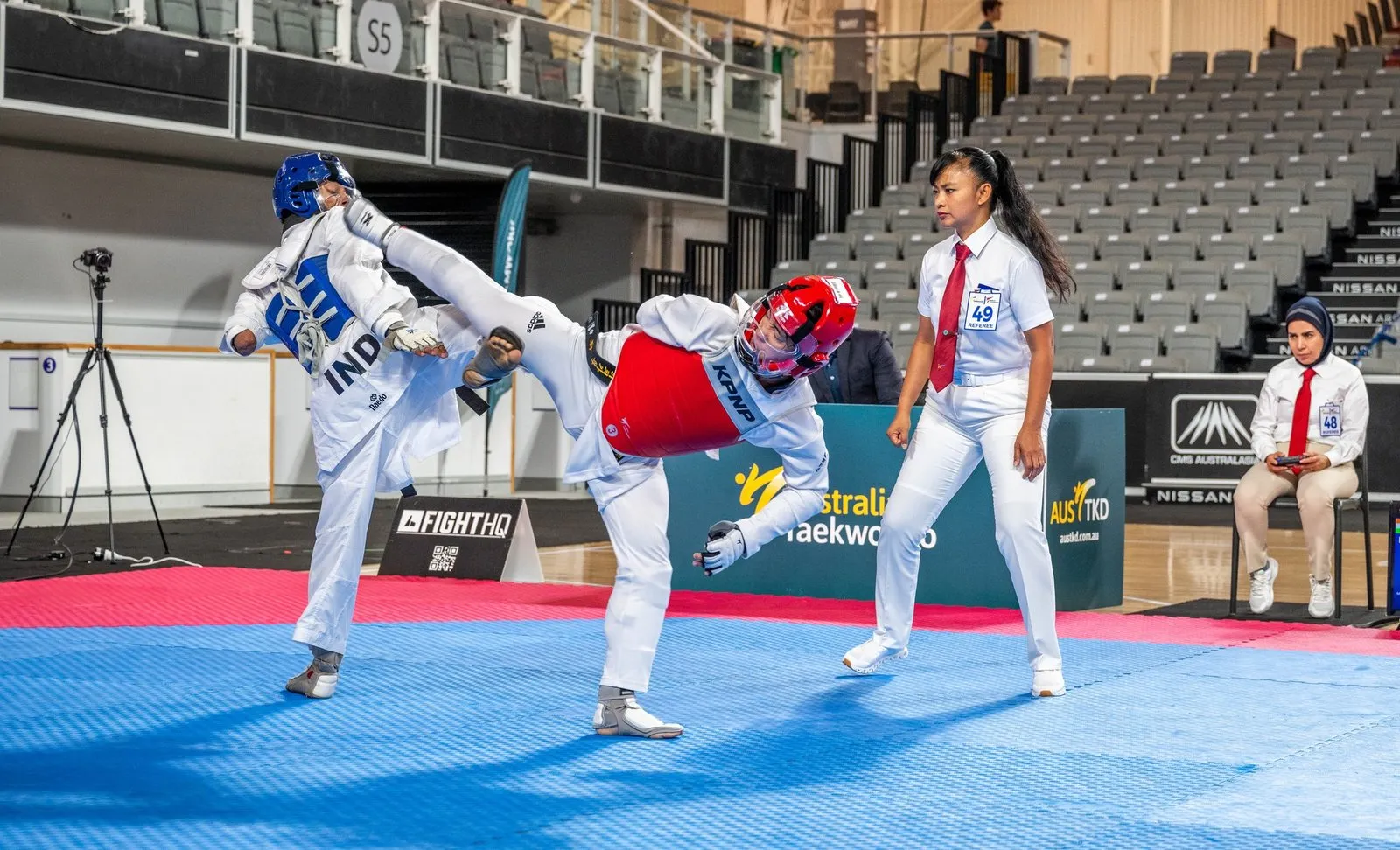
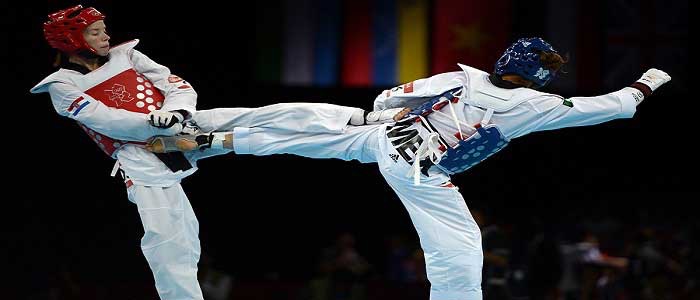 Taekwondo competitions, Three 2-minute periods The matches consist of three rounds. A one-minute break is given between rounds. During this break, athletes rest, quench their thirst, and receive instructions and tactics from their coaches. Matches begin and end with the athletes greeting each other and the referees. If the score is tied after three rounds, a one-minute rest period is given after the third round ends, followed by a two-minute fourth round where the final shots, known as the golden shot, are made. Alternatively, the match ends with penalty points being considered.
A competitor who makes illegal moves, headbutts, strikes a fallen competitor, or disobeys instructions will receive negative points. A competitor who receives 3 negative points is considered to have forfeited the match. Kicking the body and head is permitted, provided it is above the waist. Blows to the head are very difficult, risky, but more effective. Taekwondo competitions have specific rules. These rules include: striking below the waist, punching the head or face, striking the opponent's back or spine, holding, pushing, or pulling an opponent, stepping outside the line, tripping an opponent, intentionally falling to the ground, or feigning injury.
What are the techniques of Taekwondo?
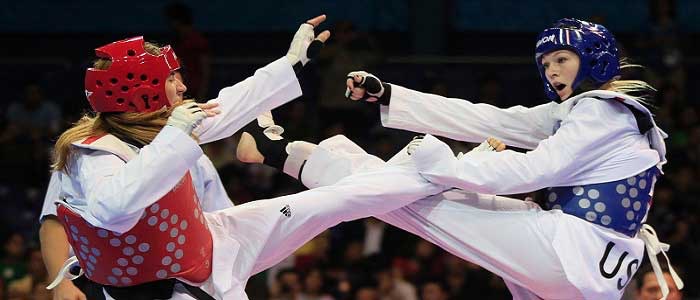
The permitted techniques are footwork and fist technique.
KIRKLARELİ TAEKWONDO COURSE PROGRAM
Week 1 KIRKLARELİ Taekwondo Course: Introduction and Basic Principles
Week 2 KIRKLARELİ Taekwondo Course: Basic Techniques and Postures
- Basic Striking Techniques:
- Ap Chagi (Front Kick): A straight forward kick.
- Dollyo Chagi (Roundhouse Kick): Circular kick.
- Yop Chagi (Side Kick)Side kick.
- Dwit Chagi (Back Kick): Kick backwards.
- Naeryo Chagi (Axe Kick): A kick from above downwards.
- Palkup Chigi (Elbow Strike)Elbow strike.
- Jireugi (Punch): A punch.
-
Basic Blocking Techniques:
- Arae Makgi (Low Block): Lower block.
- Momtong Makgi (Middle Block)Middle block.
- Eolgul Makgi (High Block): High block.
- An Makgi (Inside Block): Block from the inside out.
- Bakkat Makgi (Outside Block): Block from outside to inside.
-
Basic Stance (Stances):
- Juchum Seogi (Horse-Riding Stance): Riding stance.
- Ap Seogi (Walking Stance)Walking posture.
- Ap Kubi (Front Stance): Front stance.
- Dwit Kubi (Back Stance)Back position.
-
Kırklareli Taekwondo Course Basic Techniques: Guarding, Stepping, Forward and Backward Taekwondo Steps, Right and Left Step and escape drills. Combining basic Taekwondo techniques with stepping exercises.
-
Poomse (Pumsae) Techniques
PoomsePoomse are traditional forms of Taekwondo and involve the regular execution of specific movements. Each Poomse is designed for belts of a particular level or color.
Basic Poomse Exercises:
- Taegeuk Il JangBeginner-level poomse is symbolic of the ground. It includes basic techniques.
- Taegeuk Ee Jang: Advanced basic techniques and slightly more complex movements.
- Taegeuk Sam JangMore advanced techniques and stances.
- Taegeuk Sa Jang: Intermediate level techniques and movements requiring more strength.
- Taegeuk Oh JangTechniques that focus on speed, power, and balance.
- Taegeuk Yuk JangTechniques requiring more complex movements and coordination.
- Taegeuk Chil JangAdvanced techniques, speed, and balance.
- Taegeuk Pal Jang: The most advanced basic poomse, a combination of all techniques.
-
Other Advanced Poomse Styles:
- KoryoAn advanced poomse for black belts.
- Keumgang: Poomse at the second level of black belts.
- TaebaekFor more advanced black belts.
-
Basic Techniques Used in Poomse:
- Makki (Block)Blocking techniques.
- Chigi (Strike)Striker techniques.
- Chagi (Kick)Kicking techniques.
- Seogi (Stance)Posture techniques.
-
These techniques and poomse exercises form the foundation of taekwondo training and are important for students at all levels. The correct and effective application of these techniques is critical for both self-defense and competition performance.
Week 3: Flexibility and Strength
Week 4: Defensive Techniques
In Taekwondo, belts are used to determine a student's level and experience. Each belt indicates a student's technical skills, knowledge level, and progress in Taekwondo. Belts are generally divided into two main categories: colored belts (Gup) and black belts (Dan). Here is information about Taekwondo belts and what students need to learn at each level:
Belts (Groups) in Taekwondo:
-
White Belt (Group 10)
- For beginners.
- Basic stances, blocks, and simple hitting techniques.
-
Yellow Belt (Groups 9 and 8)
- Development of fundamental techniques.
- The first poomse (Taegeuk Il Jang) is learned.
- Simple combinations and movements.
-
Green Belt (Groups 7 and 6)
- The development of techniques and combinations.
- Advanced basic techniques and second poomse (Taegeuk Ee Jang).
-
Blue Belt (Groups 5 and 4)
- Advanced techniques and coordination.
- More complex poomse (Taegeuk Sam Jang and Taegeuk Sa Jang).
- Research on power, speed, and flexibility.
-
Red Belt (3rd and 2nd Group)
- Mastery of technique and competition preparation.
- Advanced poomse (Taegeuk Oh Jang and Taegeuk Yuk Jang).
- Defense and attack strategies.
-
Red/Black Belt (Group 1)
- Preparation for black belt.
- Review and refinement of all techniques.
- Advanced poomse (Taegeuk Chil Jang and Taegeuk Pal Jang).
Black Belts (Dan):
-
1st Dan (First Dan)
- This is the basic black belt level.
- First black belt in poomse (Koryo).
- Advanced techniques and defensive-offensive strategies.
-
2nd Dan
- Developing techniques and acquiring teaching skills.
- Advanced poomse (Keumgang).
-
3rd Dan
- Developing teaching and coaching skills.
- Advanced poomse (Taebaek).
-
4. Dan
- Approaching mastery level.
- Excellence in technique and advanced poomse (Pyongwon).
-
5th Dan and above
- Master level.
- Advanced instruction and management of Taekwondo.
- More advanced poomses (Sipjin, Jitae, Cheonkwon, Hansu, Ilyeo).
The Meanings of Generations:
- White BeltPurity and a new beginning.
- Yellow BeltThe stage where the student puts down roots and begins to learn.
- Green BeltGrowth and development.
- Blue BeltThe sky and inspiring goals for the student.
- Red BeltDanger and caution; the student is strong, but must be careful.
- Black BeltDetermination and skill indicate that the student has reached an advanced level in taekwondo.
At every level, students develop both their technical skills and their mental and physical discipline. Grade points are an important tool for monitoring student motivation and progress.
#Kırklareli-Taekwondo-Course #Lüleburgaz-Taekwondo-Course #Babaeski-Taekwondo-Course #Vize-Taekwondo-Course #Demirköy-Taekwondo-Course #Pınarhisar-Taekwondo-Course #Kofçaz-Taekwondo-Course #Pehlivanköy-Taekwondo-Course #taekwondo #tekvando #kırklareli #kırklareli-taekwondo #kırklareli-tekvando-gym #kırklareli-sports-gym #lüleburgaz-taekwondo-gym #lüleburgaz-tekvando-gym #nigde #nigde-tekvando-course #tekvando-turkiye #kayseri #nevşehir-tekvando #istanbul-taekwondo #mersin-taekwondo #karate #fitness #pilates #gym #ankara #istanbul #izmir #antalya #eskisehir #turkeytaekwondofederation
TAEKWONDO COURSE IN KIRKLARELİ - 12 LESSONS PER MONTH - 3 DAYS A WEEK
- Course : Kırklareli Taekwondo Course
- Location: Kırklareli and nearby locations
- Number of Courses: 8 lessons per month, 2 days a week.
- Course Dates: Determined by the instructor.
- Course Hours: Determined by the instructor.
- Course Duration:60 Minutes
- Participation : Group Taekwondo Class
- Age Groups: 4+ Years
- Location of the Courses: Kırklareli Center
- Service Availability: None
- Who can participate: Beginners, intermediate and advanced participants. Adults.
- Who cannot participate: Participants who were prohibited from exercising by the doctor.
THINGS YOU NEED TO KNOW ABOUT THE TAEKWONDO COURSE IN KIRKLARELİ.
- This is the price for one person for the Kırklareli Taekwondo course.
- The Taekwondo course in Kırklareli is held 2 days a week, totaling 8 lessons per month. Participants can attend either 1 or 2 days a week. The fee remains the same.
- This is the price for group Taekwondo classes in Kırklareli.
- Taekwondo courses are held in Kırklareli. Please check our other course options for Taekwondo courses in different locations.
- For other Taekwondo courses in Kırklareli, please check our other course offerings.
- Taekwondo course days and times will be determined in consultation with our instructor.
- The course fee is a monthly fee. For long-term fees, please see the other sections.
- Students who do not attend the weekly course will miss that lesson, and it will not be made up.
- Accelerated, group-level classes are offered for beginners.
- You can add Sports Health Insurance from the Extras section.
- Lesson durations are approximately 60 minutes (±).
- www.kadost.com The activities, tours, and courses offered for sale on kadost.com are exclusive to kadost.com. They do not serve as examples for other services and products.
- Prices include VAT and credit card system fees.
INFORMATION ABOUT BASIC TAEKWONDO TRAINING
What is Taekwondo?
Taekwondo is a series of physical movements and exercises designed to improve the body's strength, flexibility, balance, and coordination. A martial art originating in Korea, Taekwondo incorporates both defensive and offensive techniques and is practiced today at both recreational and competitive levels.
The Purpose of Basic Taekwondo Training in Kırklareli
-
Taekwondo Course and Physical Development in Kırklareli: To support children's muscle development, increase their flexibility, and improve their overall physical health.
-
Kırklareli Taekwondo and Motor Skills: To improve children's motor skills, balance, and coordination.
-
Kırklareli Taekwondo Course and Self-Confidence: To boost children's self-confidence and help them develop disciplined study habits.
-
Taekwondo and Social Skills: To encourage teamwork and social interaction.
Kırklareli Taekwondo Weekly Training Plan
-
Weekly Training Plan for Kırklareli Taekwondo Course: Introduction and Warm-up Exercises, Basic Taekwondo Information
-
Weekly Taekwondo Course Training Plan: Balance Exercises, Coordination Development
-
Weekly Taekwondo Course Training Plan: Flexibility Exercises, Strength Development
-
Weekly Taekwondo Course Training Plan: Rhythm Exercises, Free Movements
-
Weekly Taekwondo Course Training Plan: Basic Taekwondo Movements (Basic strikes, blocks)
-
Weekly Taekwondo Course Training Plan: Advanced Techniques (High strikes, kick combinations)
-
Weekly Taekwondo Course Training Plan: Performance Preparation, Demonstration and Presentation Techniques
-
Weekly Taekwondo Course Training Plan: Individual Assessment, Certificate Ceremony
Benefits of Kırklareli Taekwondo Course
-
Physical Health Benefits: It improves overall physical health and endurance.
-
How Taekwondo Contributes to Flexibility: It increases the body's flexibility and mobility.
-
The Strength and Endurance Benefits of Taekwondo: It strengthens muscles and increases physical endurance.
-
Benefits of Taekwondo for Self-Confidence: It improves children's self-confidence and social skills.
-
Taekwondo's Contributions to Discipline: It instills work discipline and self-motivation.
#Kırklareli-Taekwondo-Course #Lüleburgaz-Taekwondo-Course #Babaeski-Taekwondo-Course #Vize-Taekwondo-Course #Demirköy-Taekwondo-Course #Pınarhisar-Taekwondo-Course #Kofçaz-Taekwondo-Course #Pehlivanköy-Taekwondo-Course #taekwondo #tekvando #kırklareli #kırklareli-taekwondo #kırklareli-tekvando-gym #kırklareli-sports-gym #lüleburgaz-taekwondo-gym #lüleburgaz-tekvando-gym #nigde #nigde-tekvando-course #tekvando-turkiye #kayseri #nevşehir-tekvando #istanbul-taekwondo #mersin-taekwondo #karate #fitness #pilates #gym #ankara #istanbul #izmir #antalya #eskisehir #turkeytaekwondofederation